Safe coronavirus research thanks to Systec autoclaves
Reading time about 3 minutes
The new coronavirus COVID-19, which first emerged in the Chinese province of Wuhan at the turn of the year 2019/2020, has spread across all continents of the world within just a few weeks. National and international authorities are currently tasked with containing the virus by specifically interrupting chains of infection. At the same time, the coronavirus is being studied in laboratories around the world and cultivated for research purposes in order to understand how it works. This will enable the development of drugs and vaccines against COVID-19 (2019-nCoV / SARS-CoV-2) in the long term. Systec is also doing its part to protect the international community. Systec autoclaves are perfectly suited to comply with the safety guidelines published by the World Health Organization (WHO) for this purpose in relevant laboratories.
How do autoclaves increase safety against the coronavirus?
Any further spread of the novel coronavirus can have a negative impact on the current health situation of the international community. In particular, this includes the potential spread of COVID-19 / SARS-CoV-2 due to non-compliance with adequate safety standards in biological laboratories. Not only the infection of own employees poses a risk here, but also waste from security areas could contain traces of the coronavirus if it has not been sterilized according to WHO standards.
Ideal autoclaves for coronavirus research according to the WHO (BSL-2 / BSL-3)
According to the WHO guideline "Laboratory biosafety guidance related to the novel coronavirus (2019-nCoV) [link here] in the version dated February 12, 2020, biosafety levels BSL-2 and BSL-3 are required for the safe handling of COVID-19: Laboratories in which diagnostic work such aslaboratories where diagnostic work such as DNA sequencing is carried out as part of virus diagnostics should comply with the BSL-2 standard, while laboratories where the coronavirus is cultivated or is present in high concentrations for other reasons should work on the basis of BSL-3.
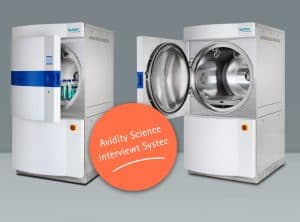
In both cases, Systec laboratory autoclaves are ideal for sterilizing contaminated waste, instruments, culture media or laboratory equipment to prevent the unintentional spread of the coronavirus. This is primarily due to three key features that the WHO prescribes or recommends for BSL-2 and BSL-3-compliant sterilization devices. Systec offers safe and validatable sterilization solutions with the corresponding prescribed documentation options.
Vacuum device
Systec autoclaves are equipped with a vacuum device that removes the air from the sterilization chamber of the device in several vacuum pulses before the actual autoclaving process. This allows the cold air to be removed from solids (e.g. pipette tips, glassware) and porous materials (e.g. textiles, filters) in order to guarantee the sterilizing effect of the saturated steam injected afterwards. For example, Systec autoclaves prevent coronavirus pathogens in cold air pockets from surviving the heating process.
Exhaust air filtration
A potential risk during autoclaving is the potential for certain pathogens to escape via the exhaust air during the sterilization process before the temperatures required for inactivation have been reached. For coronavirus-related activities, you can easily prevent this effect by using Systec autoclaves in combination with the exhaust air filtration feature. Exhaust air filtration uses sterile air filters with a heat-resistant PTFE membrane, which reliably retains microorganisms with a pore size of 0.2 μm. As a result, all escaping gases are passed through the above-mentioned sterile air filter during the heating and sterilization phase. This and the additional condensate activation ensure that no non-sterile or contaminated material can escape from the sterilization chamber.
Precise documentation
Tracing the spread of the novel coronavirus is of central importance for its containment. Systec autoclaves ensure this by digitally documenting all sterilization processes. Among other things, the system records the sterilization temperatures and periods so that any application errors by laboratory staff can be traced. This means that if coronavirus contamination does occur due to incorrect work processes, it is possible to determine exactly which sterilized items are affected and when the incorrect process took place - allowing a resulting chain of infection to be quickly identified and interrupted.
China and other countries rely on Systec autoclaves
The fact that Systec autoclaves are perfectly suited to the sterilization of laboratory waste, culture media and hazardous biological substances in accordance with WHO guidelines is already demonstrated by the fact that China, the epicentre of the epidemic, is relying on Systec solutions to research and contain the coronavirus. The Chinese Center for Disease Control and Prevention (CDC) has already purchased a large number of autoclaves for use in BSL-2 and BSL-3 laboratories throughout the country, as well as in Taiwan, via our branch in Shanghai. Many other countries are also using Systec autoclaves for coronavirus research.
Systec helps to contain the coronavirus
As the global market leader in the laboratory autoclave industry, we understand reliable and validatable sterilization solutions with corresponding documentation options. Our autoclaves, in combination with adequate occupational safety processes, guarantee the conformity of BSL-2 and BSL-3 laboratories in accordance with the guidelines of the World Health Organization.
Together with you, we want to fight the coronavirus. It has also led to necessary adjustments at Systec in accordance with the requirements of the federal government, but we remain available for you! Despite high demand, our autoclaves remain available for delivery and all inquiries and orders will continue to be processed.
Contact us - we will be happy to help you!