Exhaust air filtration in Systec autoclaves
Reading time about 3 minutes
Safe sterilization of coronavirus particles reliably prevents dangerous aerosols from escaping during the autoclaving process.
Autoclaves for sterilization with steam are used in biological and medical laboratories in particular to inactivate natural or genetically modified microorganisms. However, during the heating phase, in which the air is removed from the pressure vessel, biological agents can potentially enter the work area as aerosols.
Filtration of the exhaust air is therefore particularly important in the course of the current coronavirus epidemic. Although pure SARS-CoV-2 particles cannot theoretically be captured by FFP masks and some filters with a pore size of 0.2 μm due to their small size of around 0.1 to 0.14 μm, for example, tests show that the exhaust air filtration systems in Systec autoclaves reliably prevent dangerous aerosols from escaping during the autoclaving process.
How exhaust air filtration works
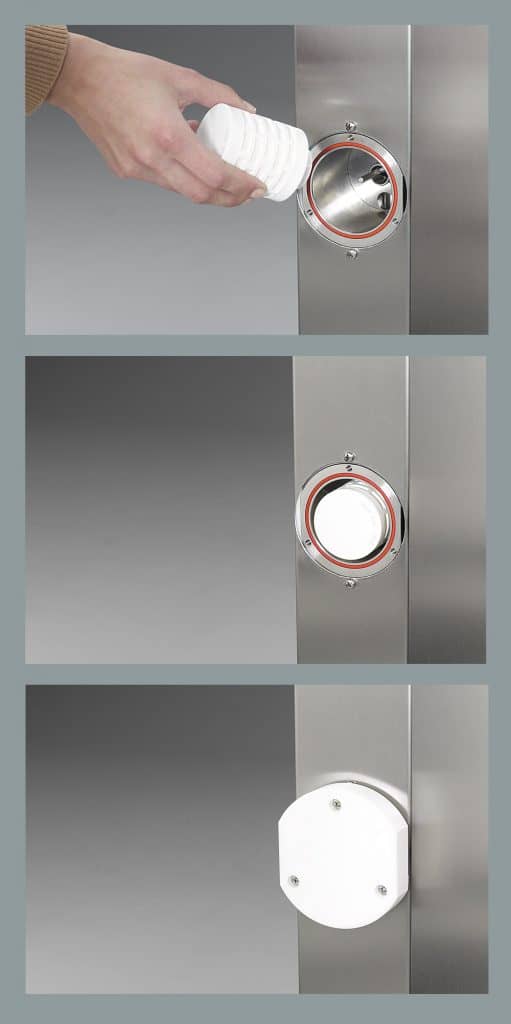
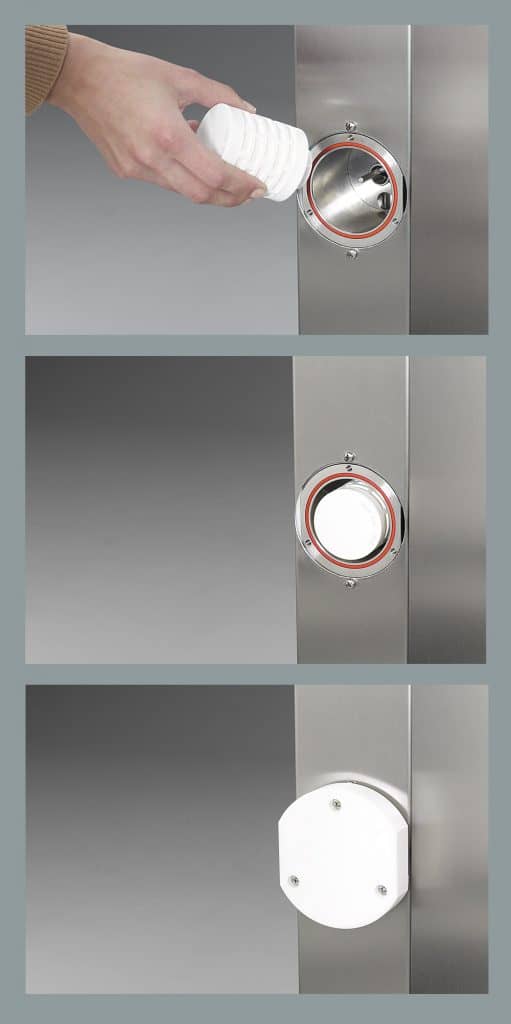
In Systec products, an autoclavable sterile air filter in a filter housing and a PT-100 temperature sensor are used to filter the exhaust air, the process engineering combination of which ensures reliable filtration of the exhaust air: All air displaced from the autoclave is passed over the filter so that microorganisms are retained in it. The filter is sterilized "in-line" during the sterilization process in order to inactivate the microorganisms retained in it. The temperature in the filter housing is monitored via the PT 100 temperature sensor mentioned above. The condensate is retained in the pressure vessel during the heating and sterilization phase and safely sterilized at the same time. Thanks to the exhaust air filtration and condensate sterilization, no viruses or germs can escape before the end of the sterilization phase. This ensures that all gases or liquids that could pose a potential risk to the environment when displaced from the autoclave are filtered.
Systec GmbH uses autoclavable sterile air filters in the form of a filter cartridge made of a PTFE membrane with a pore size of 0.2 μm as the filter medium. The filter cartridge is also located in a pressure-resistant housing and can be quickly replaced at any time. The PTFE membrane is additionally protected by polypropylene fleece on the upstream and downstream sides. Outer support bodies and end caps made of a special, heat-stabilized polypropylene and an inner support body made of stainless steel ensure exceptionally high thermal and mechanical resilience. The filters are subject to a maintenance counter with a replacement interval of 150 cycles.
To ensure validatable filtration, the heating temperature of the autoclave is monitored throughout the process by a PT-100 temperature sensor (class A). This also ensures that appropriate temperatures are reached in the filter cartridge to safely inactivate filtered particles. The autoclave is set to fault mode in the event of any deviation from the specified process sequence, which prevents contaminated exhaust air from escaping. Integrated user management also prevents unauthorized access.
Tested filtration
To test the retention capacity of aerosols, the filter in the Systec autoclaves was subjected to an integrity test. During the integrity test, a sterile air filter element is exposed to approx. 1012 particles of the critical particle size (0.1 μm to 0.3 μm)/test/min. The filters are loaded under normal process conditions (sterilization temperature 121 °C, holding phase 20 minutes, gravitational operation). The result shows a penetration of less than 0.00005 % of the loaded particles, i.e. penetration of the filter by microorganisms of the typical size of SARS-CoV-2 particles is excluded.
Advantages of Systec exhaust air filtration
- Safe retention of microorganisms in the potentially contaminated exhaust air displaced from the autoclave by filtration.
- In-line sterilization of the filter with continuous temperature monitoring. The filter is sterile again after each sterilization cycle.
- In-line sterilization of the potentially contaminated condensate produced in the autoclave chamber by steam injection.
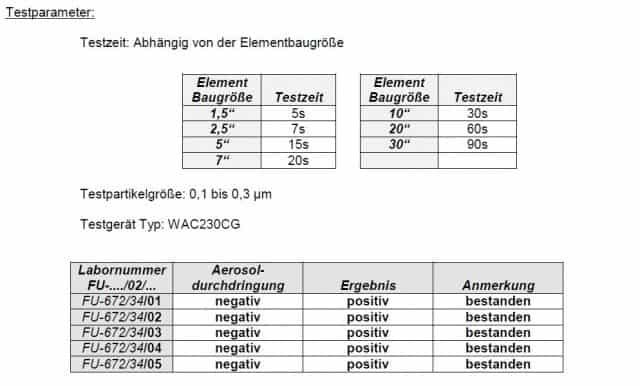
Safe sterilization of coronavirus particles
Any medical or biological laboratory that sterilizes solids or liquids with an autoclave should use an autoclave with exhaust air filtration for the safety of employees. This procedure can be considered safe and proven according to resolution 2/2009 of the Committee for Biological Agents (ABAS).
Penetration of the filters is also reliably ruled out for COVID-19 viruses: Although these are small enough (0.16 µm) to theoretically pass through the membrane, in reality they are transported in the aerosol by larger droplets and are therefore retained by the filter. Even smaller particles (less than 0.1 µm) are initially retained by the filter and then inactivated by the sterilization heat of the autoclave. A PT-100 temperature sensor also ensures that this filtration process runs reliably and can be validated.